Panel @ IAPP AI Conference: What the AI Act means for marketing
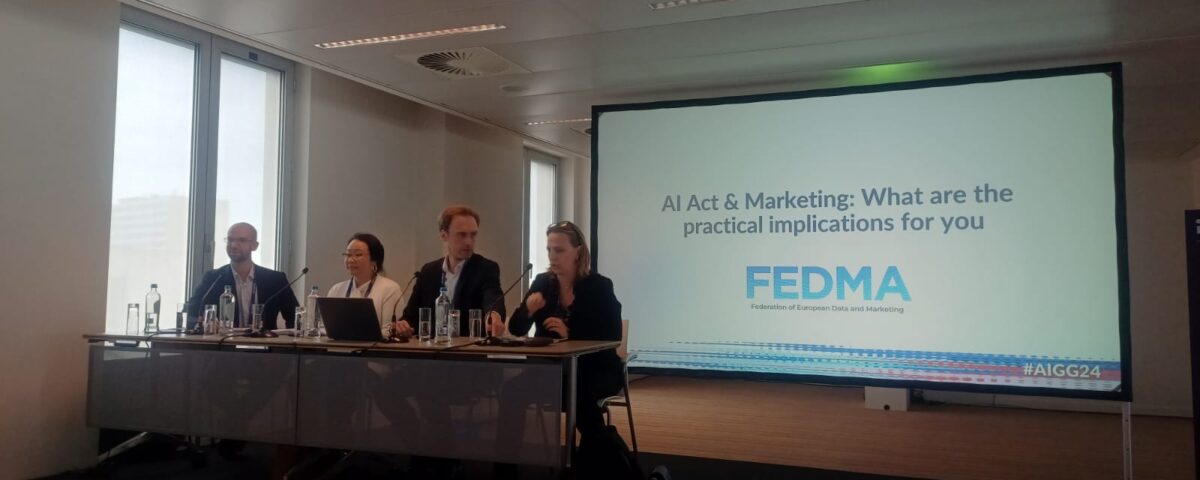
On 5 June, in the context of the AI Global Governance by the International Association of Privacy Professionals (IAPP), FEDMA organized a panel on AI marketing tools and the EU AI Act moderated by Enrico Girotto.
Dr. Sachiko Scheuing (Acxiom) first gave an overview of the main use cases of AI for marketing purposes based on four categories: generative, learning, visuals and conversational. Nathalie Laneret (Criteo) explained how Criteo leverages AI for advertising purposes, including audience targeting, product recommendations, creative optimization, and predictive bidding. Providing insights over the past negotiations on the AI Act, Kai Zenner (European Parliament) said that despite some attempts by certain political groups to explicitly expand the scope of the Regulation to AI systems used for marketing and advertising, the final text recognizes that most associated risks are already covers by existing data protection and consumer protection legislation.
The panelists pointed out that AI marketing tools only pose “low risks” for consumers, stressing that even where automated decision-making takes place, it is unlikely that it would meet the threshold of Article 22 GDPR, creating legal or similarly significantly effects on individuals. Recognizing that the application of AI tools for marketing and advertising purposes may nevertheless require some adjustments to marketers’ compliance with the GDPR, the panelists underlined that Data Protection Officers (DPO) are the best placed to address any challenge in this regard. In addition, existing tools such as GDPR Codes of Conduct or the forthcoming DSA Advertising Code could be leveraged to clarify the application of AI systems to marketing and advertising.